
The Lineage of the Eye
Before I pivoted to shooting family portraits, I spent over forty years working as a photojournalist. I covered major city press assignments, national news features, and the cultural shifts that defined our era. My assignments put me face-to-face with public figures, U.S. presidents, iconic actors, and legendary musicians.
When you spend that many years in fast-paced news environments, you learn to read a face instantly. You don't wait for the pose—you look for the tiny, split‑second gestures—a shift of the mouth, a glance away—that reveal who they are when they forget the camera is there. Those feature story instincts are exactly what shape my portraits today.
Now, from my studio in Colorado, I work exclusively with large-format film. I use a mahogany view camera and physical sheet film to slow down the process and really craft the photograph. Each portrait is made as a single exposure—a real, physical print built to outlive us all.
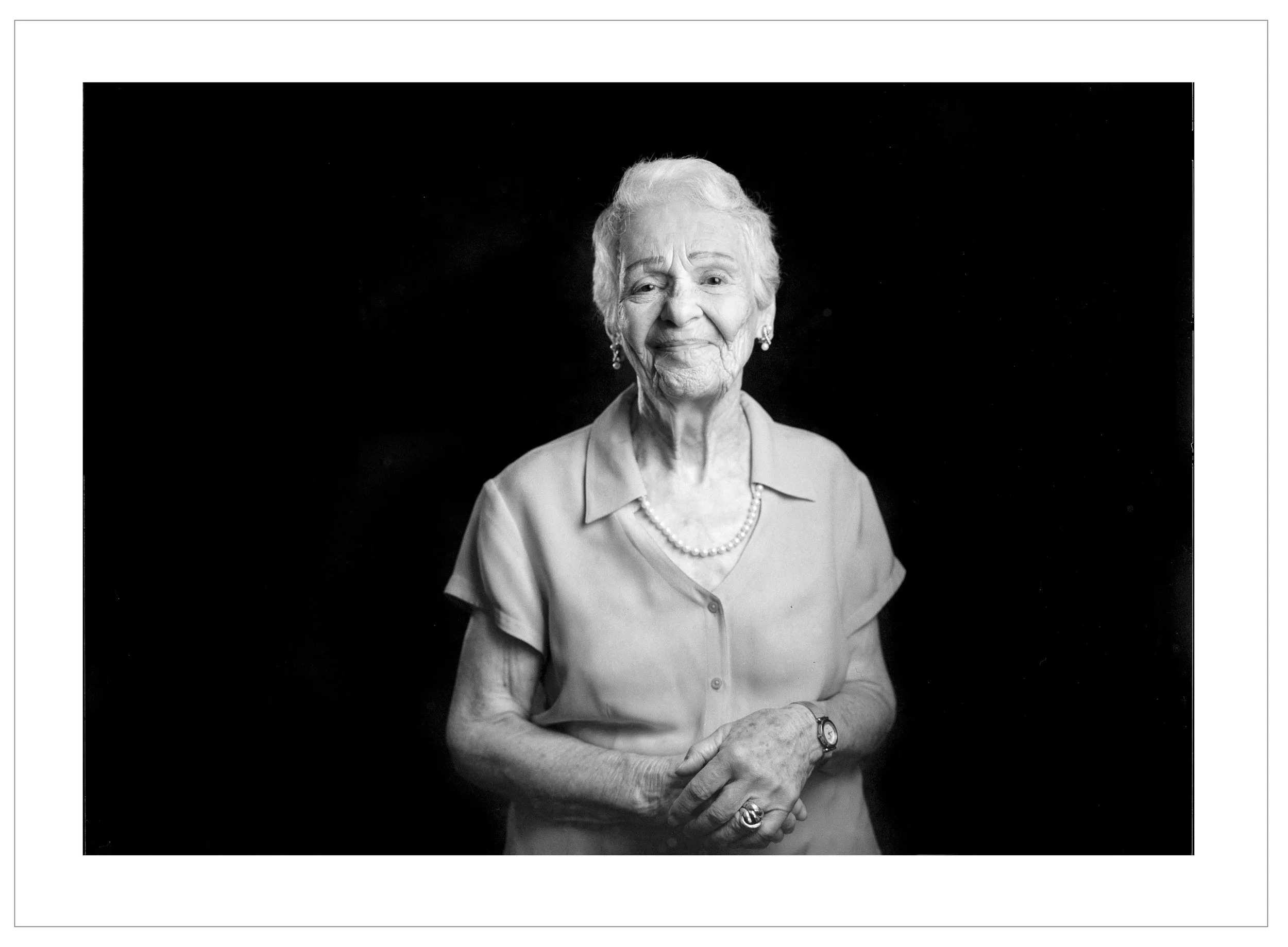
Large-format matriarchal portrait made on gelatin silver black and white film and custom printed.
Origins — Kandrzej Archiva Fotografia
Andrzei Wajda — Poland
The roots of this work begin with my great-grandfather, Andrzei Wajda, who was born in Szufnarowa, Poland in 1878. (The ‘Andrzei’ spelling reflects our older family records, while ‘Andrzej’ is the modern Polish form.) He learned photography in its earliest form—when every image was built through light, chemistry, and time. By 1900, he was obsessed with the craft of photography, making pictures with an intuitive eye for light and shadow.
In 1902, his son, Antoni, was born. Antoni grew up inside this photographic environment, learning the techniques from his father before eventually carrying the family's artistic trade across the Atlantic. Andrzei remained in Poland, anchoring the family's native roots in Europe.
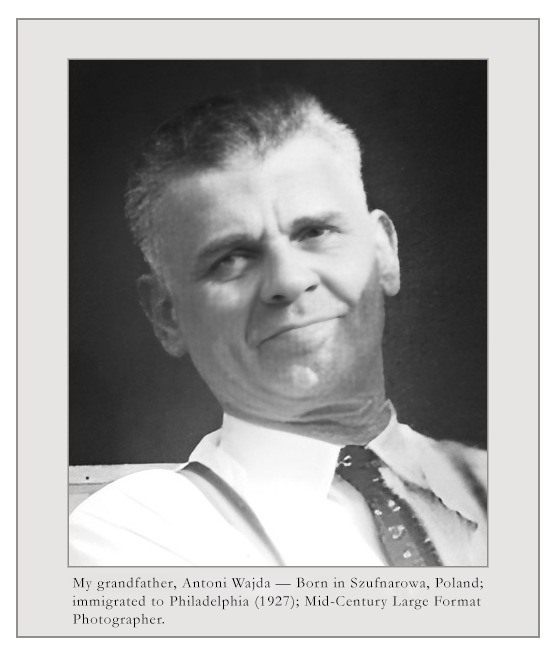
Antoni Wajda — America
In 1927, Antoni left for America, traveling by ship from Liverpool to New York. He settled in Philadelphia, bringing the family’s photographic tradition to the United States.
While many photographers later adopted smaller 35mm cameras, in the 1930s, Antoni moved from wooden view cameras to a 4x5 press camera—the Speed Graphic. Carrying the handheld camera through the city, he documented working-class neighborhoods, industrial growth, the bustling street life across Philadelphia, and of course, his family life.
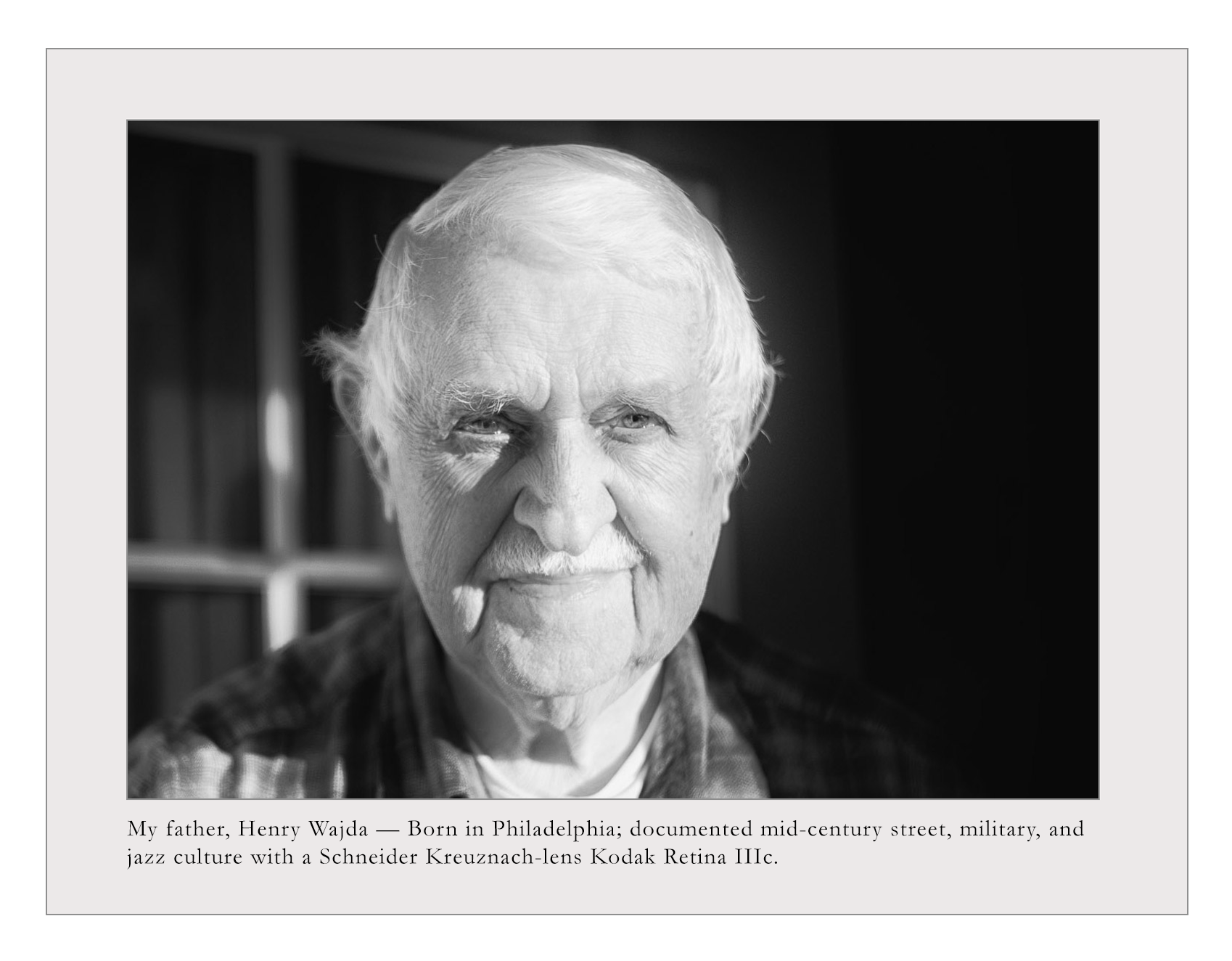
Henry Wajda — A New Life in America
Born in Philadelphia in 1932, my father, Henry Wajda, continued the family line. He used a Kodak 35mm Retina IIIc during his service in the U.S. Army in the 1950s, where he was stationed at Fort Richardson, Alaska.
Once his service ended, he documented life in his Port Richmond neighborhood, the Italian Market where his parents shopped on weekends, and eventually his own family—including me. That German-lens camera eventually became mine.
Cinematic Echoes and A Family Legend
Every family history carries its own stories. Ours includes an encounter in postwar Kraków between my great-grandfather and a young art student named Andrzej Wajda—the man who would later become one of Poland’s most renowned film directors.
As the story goes, the young student was navigating the streets of a recovering Europe, developing the stark visual style that would later define cinematic masterpieces like Ashes and Diamonds. Andrzei and Andrzej bonded over their shared name and a mutual obsession with photography. My father heard the account directly from his grandfather, and it became a cornerstone story whenever our family history was discussed.
For us, the connection links our generations through a shared language of contrast, light, and telling stories with pictures.
The Origin of the Name
The studio operates under the name Kandrzej Archiva Fotografia.
Kandrzej honors a deep family history, combining ancestral lineage with my great-grandfather’s name, Andrzei. The spelling preserves a deliberate "j" at the end as a permanent nod to the family connection with the iconic Polish filmmaker. This name represents our family roots, our history in Philadelphia, and the historic analog craft I still practice.
Archiva represents the absolute physical permanence of our darkroom medium; we are not collecting fleeting pixel bytes, but archiving tangible family history onto physical silver-halide film sheets built to outlive the century.
Fotografia uses the traditional Polish spelling for photography, firmly anchoring the brand to its Eastern European roots and signaling that your session is a serious fine-art commission rather than a commercial consumer portrait.
Now operating in the foothills of Boulder, Colorado, this hundred-year heritage is carried forward into every session, creating a physical bridge between my ancestry and your family's lineage for generations to come.
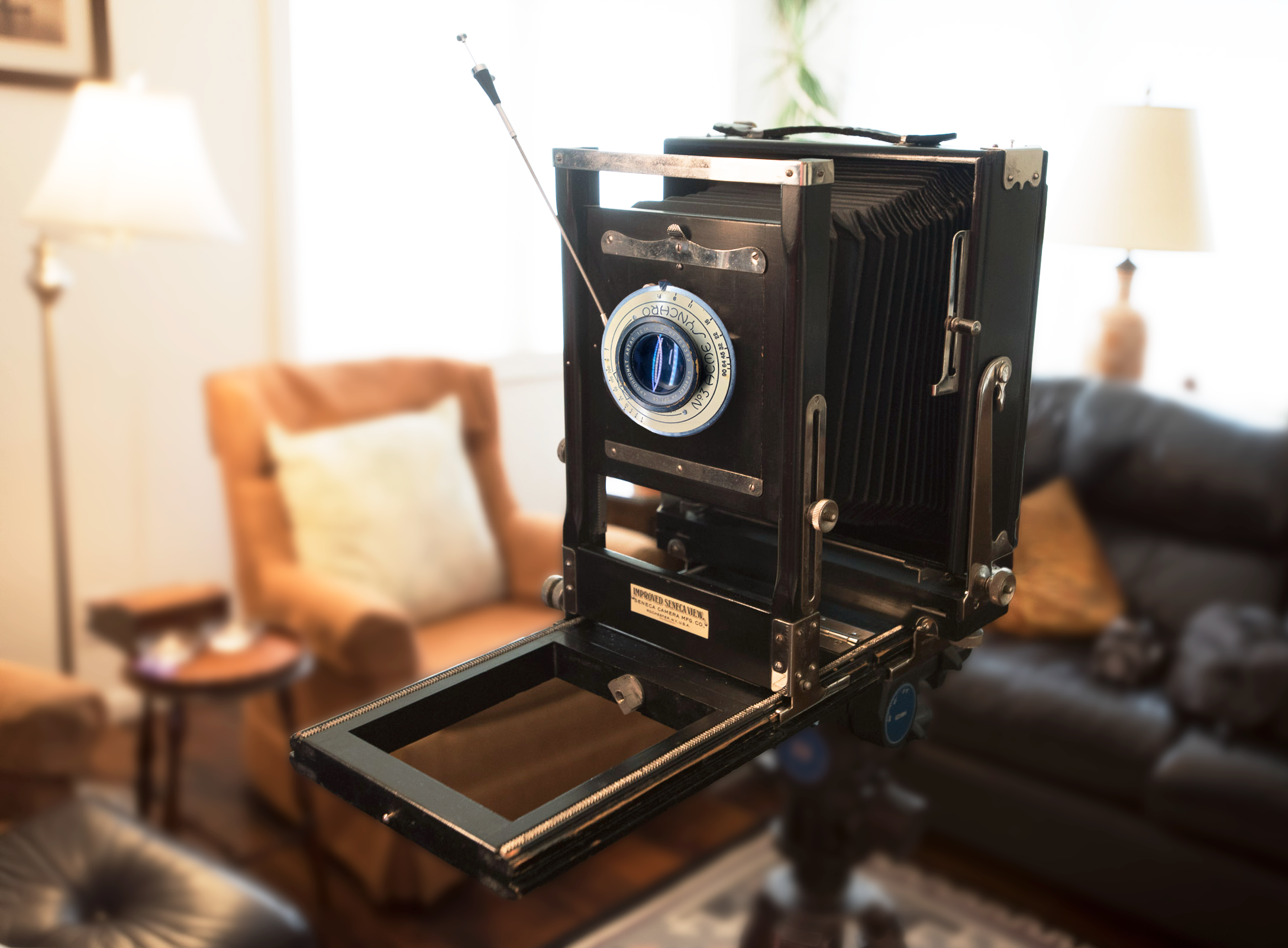
Seneca View Camera circa 1906 in use at a portrait commission.
The Artist Manifesto
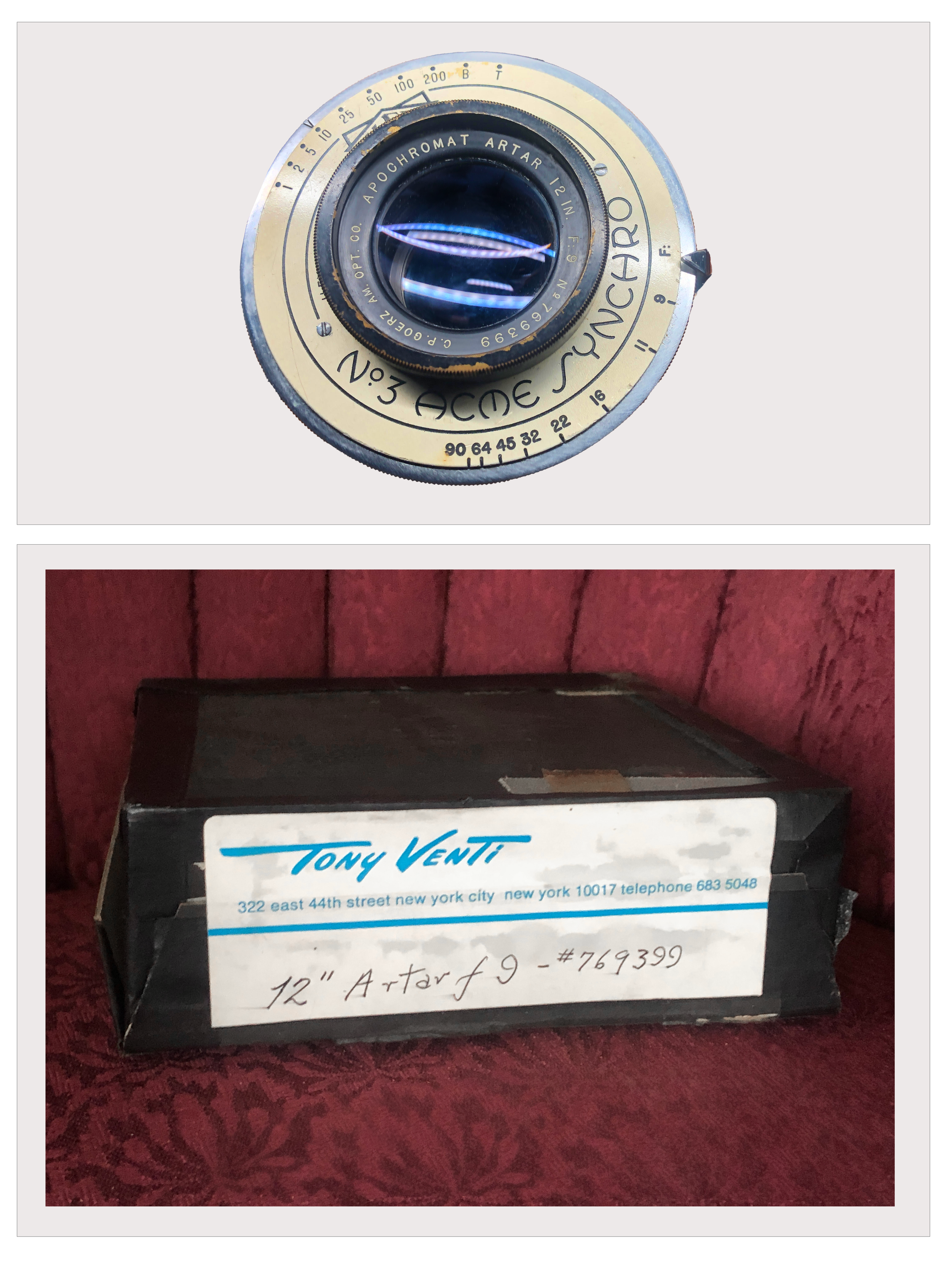
Tony Venti Studio Lens Box for Goerz Apochromat Artar 12” F/9 and No. 3 Acme Synchro Shutter—the “Brando” lens. Serial No. 769399.
I make portraits with a century-old mahogany view camera and a vintage Goerz Artar 12” f/9 portrait lens. The glass came from the estate of renowned 1950s New York photographer Tony Venti, whose family told me it was the very lens he used to photograph Marlon Brando.
I use this historic lens and physical sheet film to slow down the process and craft each photograph.
Each sheet of film holds a single moment. The light in the room passes through this old glass and changes the silver halides on the film forever. What you get is a handcrafted gelatin silver print—a real object that future generations will actually hold in their hands.
This is the creation of a permanent family object, made to endure.
I work with clients throughout the Denver, Boulder, and Rocky Mountain regions, as well as nationally and worldwide.
— Kandrzej
The Large Format Portrait Commission — A Slow, Intentional Partnership
A portrait session with me is a slow, collaborative process designed for families and individuals—matriarchs, patriarchs, and siblings—who value the intentional pace of historic craftsmanship. When you sit for a large-format portrait, we are doing something highly intentional.
On large-format film, every frame records a single, unrepeatable moment of light. To ensure complete artistic authenticity, our master sittings result in a single 8x10 film sheet contact-printed directly onto museum-grade 11x14 fiber paper. For prominent estate spaces demanding massive architectural scale—such as formal hearths or grand dining rooms—larger print dimensions are custom-executed through a specialized archival scan-to-print translation process.
When you hold the finished gelatin silver print, you are holding the physical result of that original moment. The light that once reflected off you is the same light that formed the image you now see and touch.
Over time, the physical photograph becomes more than an image. It becomes a connection—to a person, a moment, and a presence that once stood in the room. For future generations, it is a way of holding onto something that truly happened, in a form that still exists.
If you would like to commission a large-format family portrait in Denver, Boulder, across the US, or worldwide, contact the studio to begin your private fine art consultation.
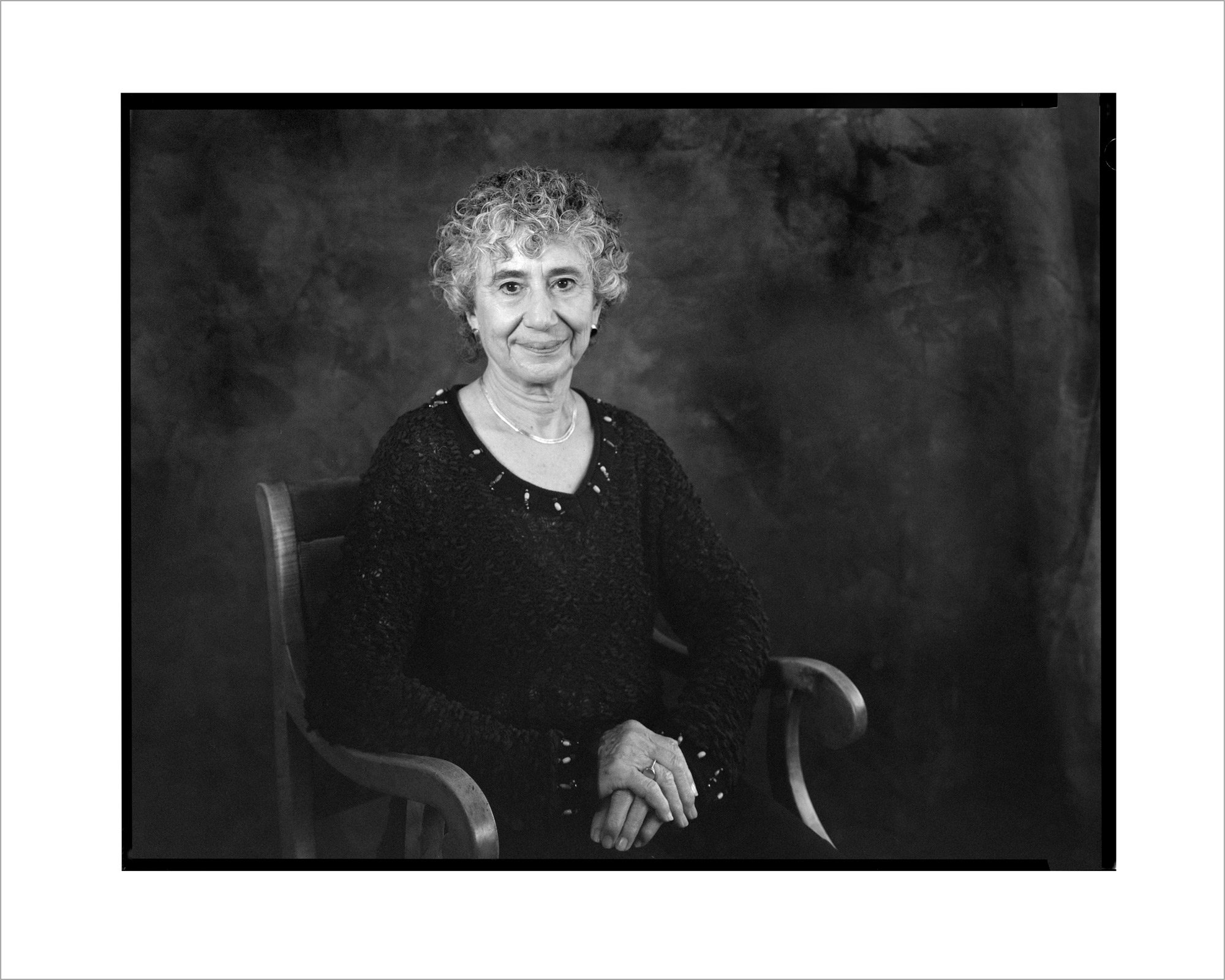
Large-format matriarchal portrait made on black and white gelatin silver film and hand-printed in a darkroom.
The Fine Art Portrait Commission Process
I - The CONSULTATION
A straightforward introductory conversation to discuss your ideas, map out the logistics of a large-format session, and check calendar availability.
II - The Design
A collaborative session where we establish the visual direction of your portrait. We review wardrobe selections, choose the setting—whether it's your home, a specific landscape, or a hand-painted Old Masters backdrop—and plan out the lighting.
III - The Sitting
A private session at your location. Available worldwide. The pace slows. We compose each frame on large‑format sheet film, treating the sitting as a quiet study in character.
IV - The Darkroom
Hand development of the film followed by archival silver-gelatin printing. I personally handle the processing and manipulate the tonal contrast to achieve the final printed photograph.
V - The Finished Piece
The final print is mounted using museum-grade archival materials and hand-delivered in a custom-crafted frame, ready for your display.
To begin this process, please register your inquiry on our Studio Contact & Registry page.
The Custody of the Negative
A Kandrzej portrait is created as a unique, singular piece. To maintain this, I follow a strict process:
The Master Negative: Each portrait is shot on large-format silver halide film.
The Sole Print: Only one silver gelatin print is created from the negative, unless additional copies are ordered at the time of commission.
Final Transfer: The negative is placed in an archival case, and handed directly to you to keep in your family archive forever.
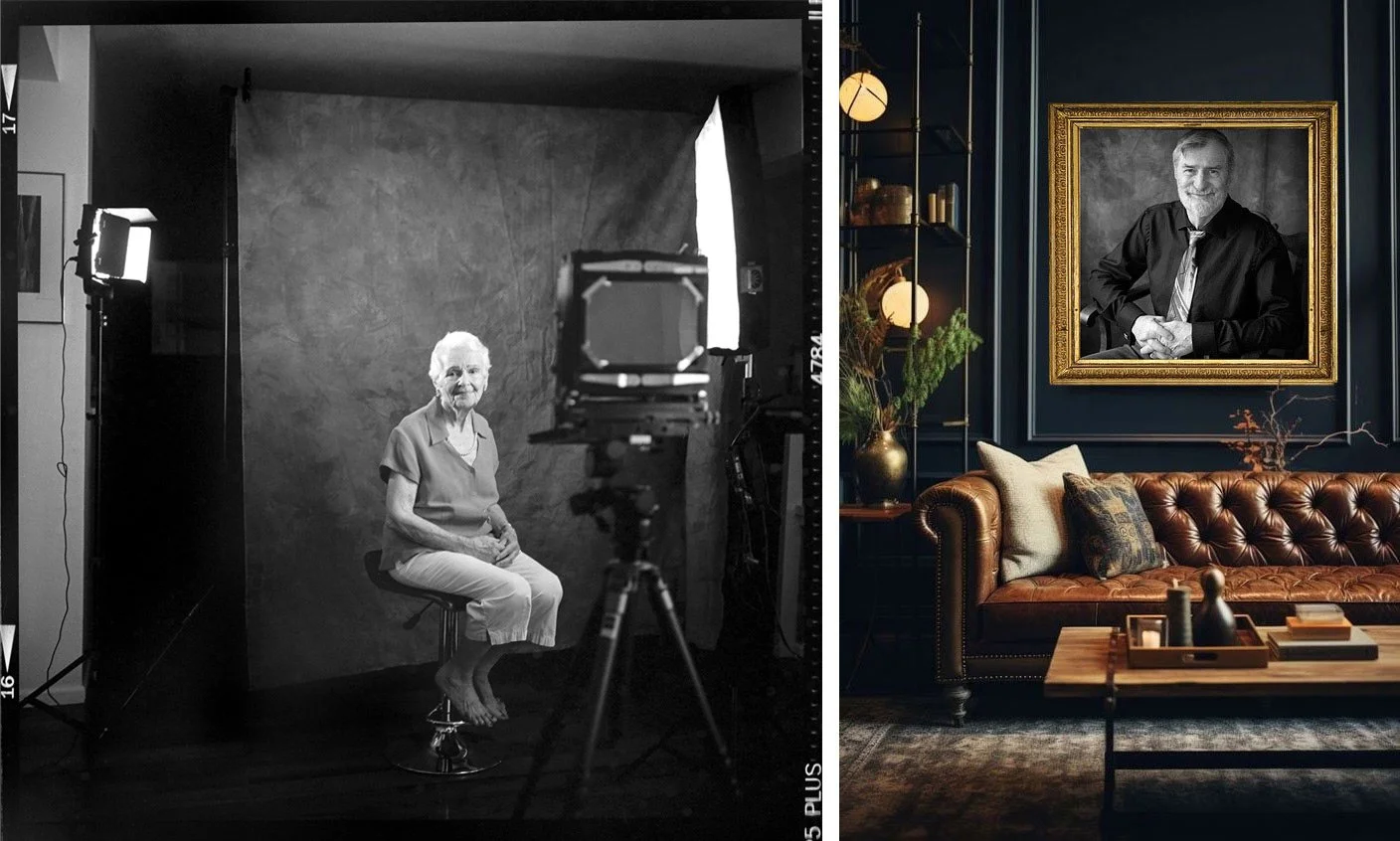
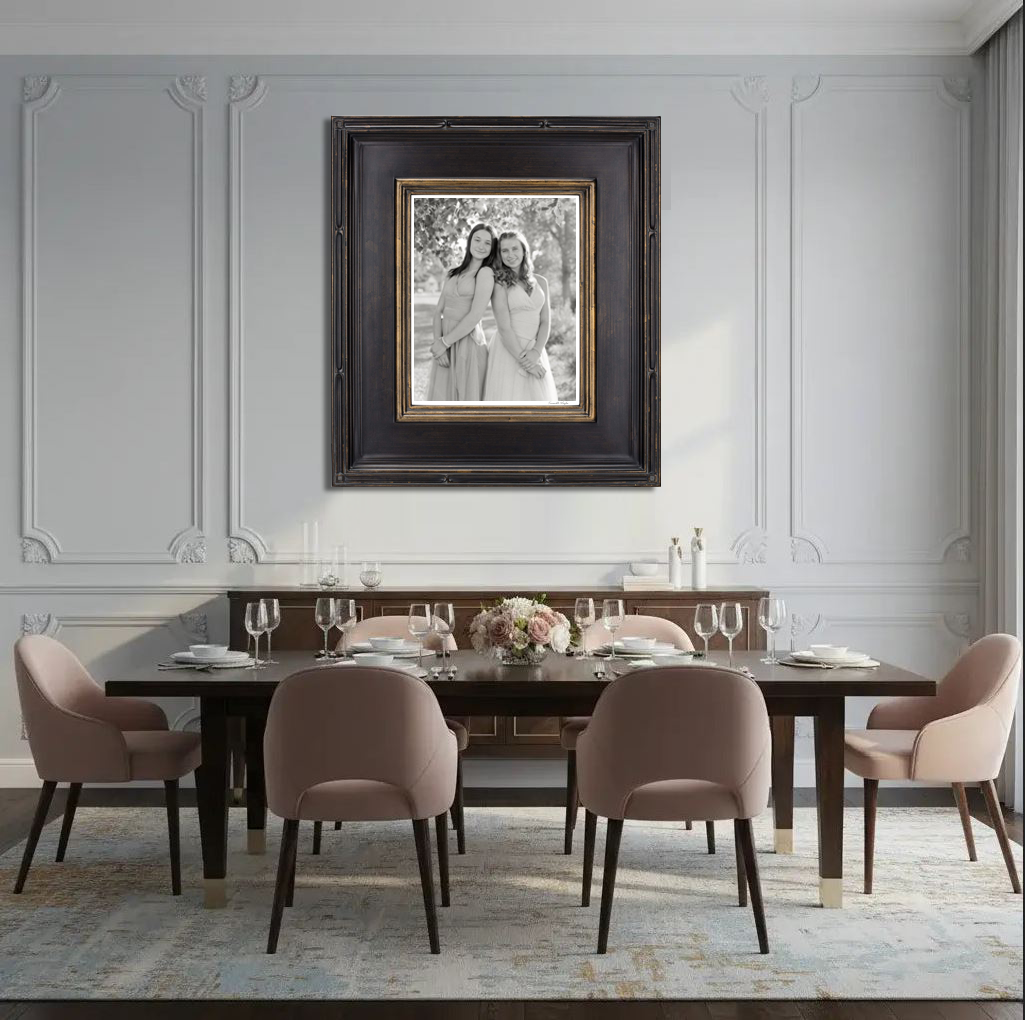
A matriarchal large-format studio setup and a patriarchal portrait commission custom-framed and displayed in a client’s home.
A Commitment to Client Privacy & Discretion
Privacy is a fundamental part of this work. To protect the security and privacy of my clients, a standard Non-Disclosure Agreement accompanies every commission. Your likeness, family, and home remain completely confidential. I do not publish client portraits anywhere—on social media, portfolios, or advertising.
The Atelier Registry
Because of the slow, hands-on nature of large-format film and darkroom printing, I only accept a small number of commissions each year. If you'd like to talk about working together, please get in touch with the studio directly. Inquiries are reviewed in the order received.
Scheduling a Portrait Commission
To respect our shared time and secure the darkroom materials needed for your project, a deposit is required to book your session dates. The remaining balance is due after we finalize our design, before the day of the photography session.
Because of the hands-on nature of darkroom chemistry and physical film, only a limited number of commissions are accepted into the registry each year. Base commissions begin at $17,500. Detailed travel logistics, estate schedules, and sub-commission structures are provided upon inquiry.
To understand how we protect our calendar and darkroom schedules, read our full Protocol of Discretion & Studio Policy.
Fine Art Portrait Commissions: Frequently Asked Questions
What is a fine art large-format portrait session?
Instead of working quickly with modern cameras, a large-format session uses physical, silver-halide sheet film. Every frame is carefully set up, lit, and eventually developed by hand. This traditional craftsmanship yields an exceptional depth and tonality that cannot be replicated.
Where does the portrait commission take place?
Sessions are hosted entirely at your location. Travel can be arranged for both national and international commissions following our initial design consultation.
How long is the waiting list?
I usually begin planning commissions several months in advance, so it’s best to inquire early if you have a specific season or family gathering in mind.